

Lead generation websites
A lead generation website is built to be found by people who have never heard of you. Instead of one page describing everything you do, it has a page for each service in each place you cover, so it can answer the exact thing somebody searched. Getting in touch is then made as easy as possible on every one of them.
Have you done this before?
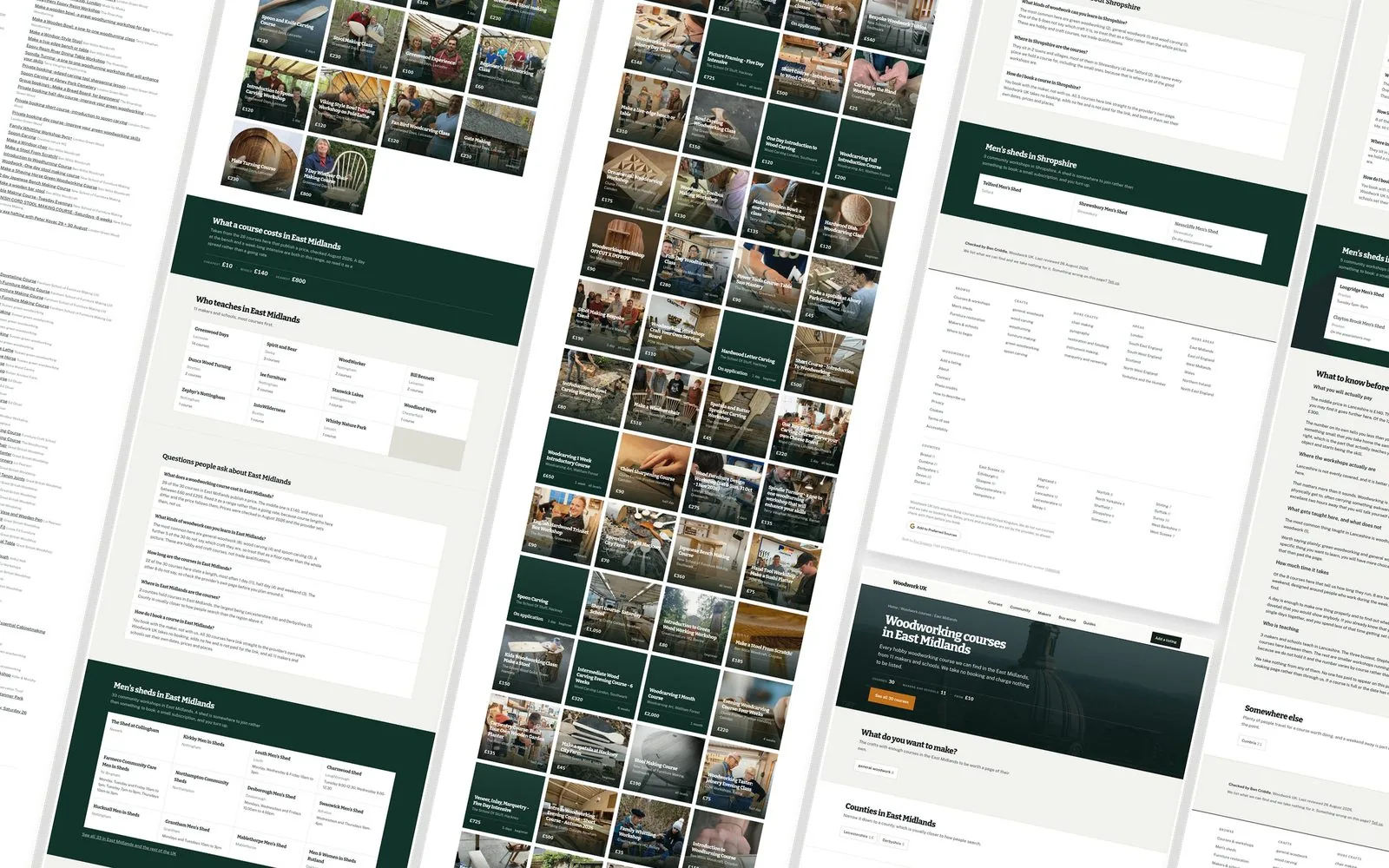
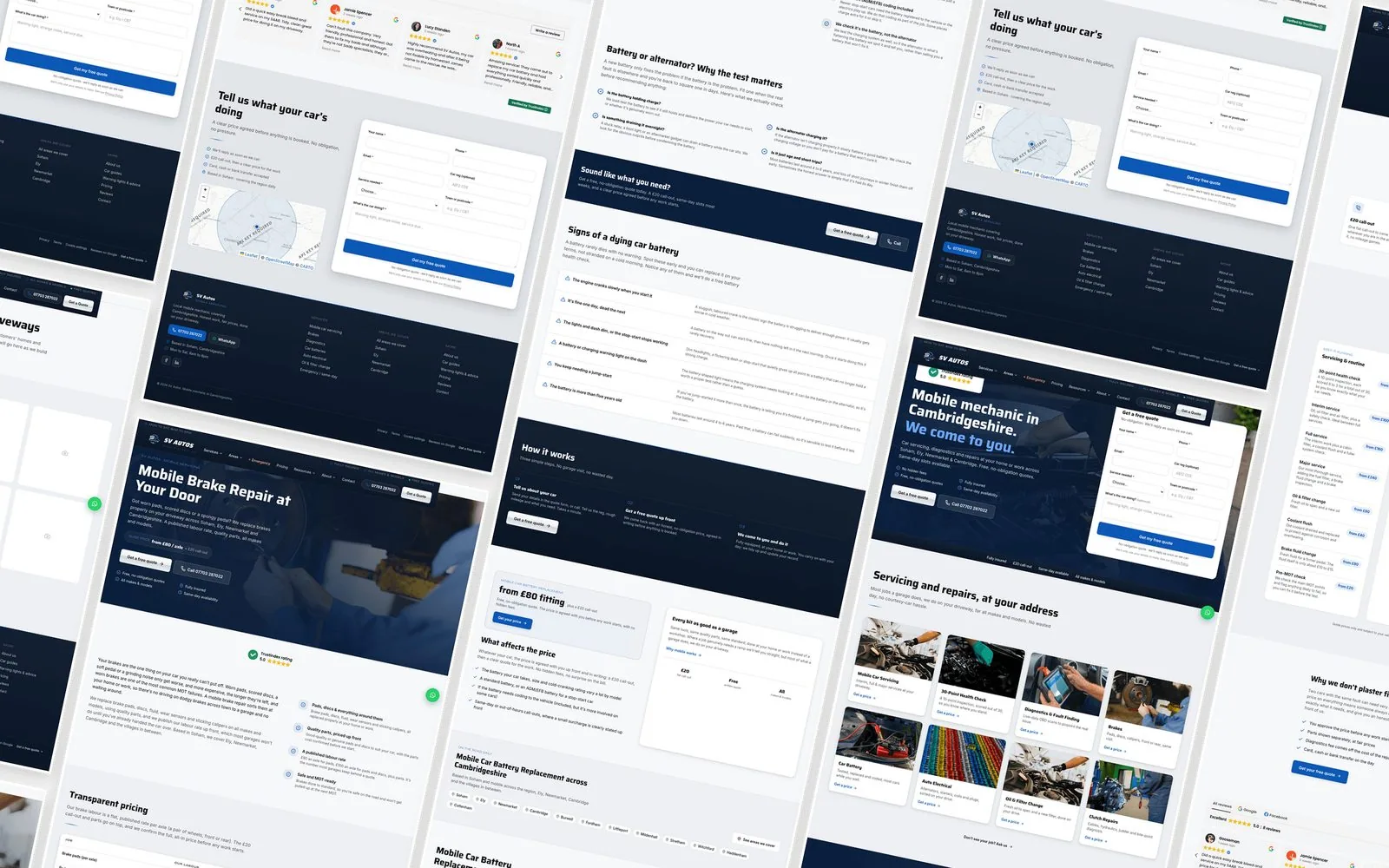
Fixr Systems builds websites whose whole job is to generate enquiries. Woodwork UK and Asbestos Specialists UK were built on exactly the model described on this page, and both are live.
Why lead generation websites are shaped differently
A normal website is built to represent you. This is built to be found, which is a different shape: many more pages, each answering one specific search, every one written for a stranger, and all of it tracked so the next page is informed by the last. Here is what goes into one.
The demand, measured first
Actual search volumes for your trade and your patch before anything gets built, so the pages that get made are the ones people are already looking for.
A page for each real question
Service pages and place pages, because that is genuinely how people search.
One page per question, so each can answer it properly and none compete with each other.
Written for somebody who does not know you
Plain language, no assumed knowledge, the answer up front.
Trust signals sit where the decision happens and contact is one tap away on every screen.
Built to be read by Google
Fast on a phone, structured so search engines can read it, and organised so every new page strengthens the ones around it.
Tracking from day one
Calls, form fills and WhatsApp taps are counted per page, so you can see which pages bring the work and which do not.
Added to, not finished
These get better the longer they run, as more searches are found and more pages answer them.
The next pages are chosen on what the tracking shows.
Why most websites never bring in work
A brochure site is built to describe you to people who have already found you, and it does that job perfectly well.
It was never built to be found by a stranger searching for a specific service in a specific town. That is where most new work comes from.
One page cannot rank for many things
One services page listing everything competes against itself for every search, and usually wins none of them.
Nobody searches the way you describe yourself
People type a job and a place. Sites written in trade language never meet that search.
Contact is an afterthought
A form at the bottom asking for more than a stranger will give, when they were ready to ring.
What happens once the site starts working
The phone rings because of a page you have not thought about since it went up.
Somebody in the next town searches for one specific thing, finds the page that answers exactly that, and calls you from it. It keeps happening while you are on a job, it keeps happening in the months you spend nothing on advertising, and you can see in the tracking exactly which pages are doing it.
The enquiries arrive while you are on a job.
You can see which pages are earning.
How these are built
Each real question gets a page of its own so it can rank on its own, and service pages sit alongside place pages, because a service plus a place is how people search locally.
Every page is written for the search that already exists rather than the one we would like to exist, and getting hold of you is made easy with phone, WhatsApp and a short form.
Speed and structure come first, because a slow page loses people before they read it, and tracking goes on from day one so you can see which pages bring the work. The site is built to keep growing rather than finished and left.
Know what you need already? Tell us in a couple of lines and we respond within two working days.
One we built
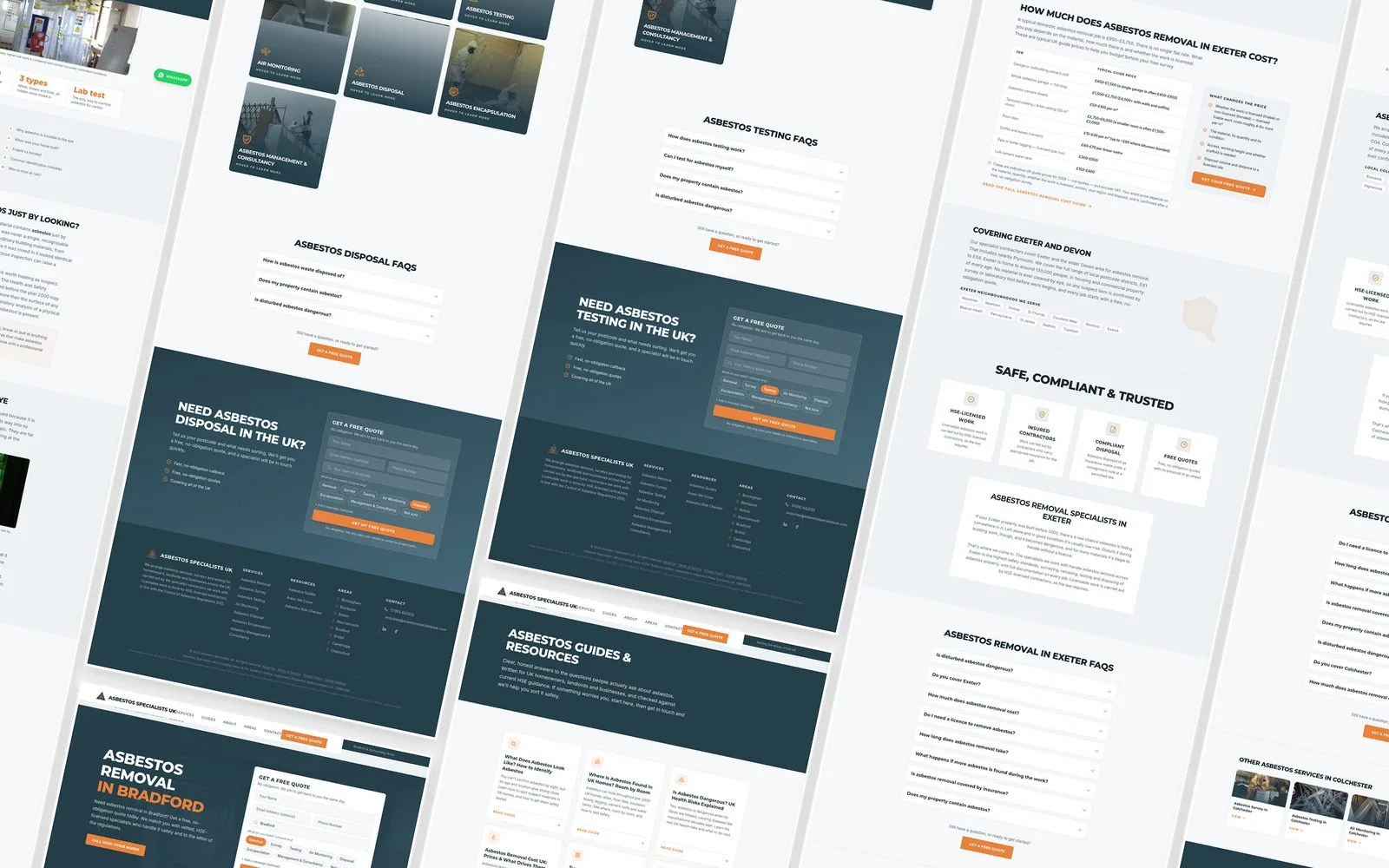
Asbestos Specialists UK
Directory, UK wideA directory built on exactly the model described here, page by page, for the searches people were already making.
What we did
- 120 pages of area guides, county hubs and national guides, each one answering a real search
- Written for the search that exists rather than the one we wished existed
- Phone and contact on every screen, because these are urgent enquiries
- Live since July 2026 and still being added to
120 pages live since July 2026, cited 14,628 times by Microsoft Copilot in under three months from launch.
See the Asbestos Specialists UK case studyA lead generation site is built to be found by people searching for exactly what you do, and to make getting in touch simple. Built properly it keeps bringing enquiries in long after you stop paying for ads.
Ben Criddle, owner of Fixr Systems

Seen enough? Tell us what you do and where you work, and we respond within two working days.
Getting started with a lead generation website
We start by measuring the demand, with actual search volumes for your trade and your patch, and you see the numbers before anything is built. If it is, we map one page to each real question and build it to keep growing rather than to be finished and abandoned. Tracking goes in from day one so you can see which pages bring the work and which do not.
Most projects take 2 to 4 weeks. Some are quicker, some take longer, and the scope decides which.
Most local searching starts on a Google Business Profile, and its rules are published, so there is no guesswork about what qualifies. Google Business Profile guidelines
What a lead generation website costs
Scoped per build, because the search demand for your trade and patch sets how many pages are worth making.
You get a fixed quote before anything starts, and the price you agree is the price you pay. Pay up front, a deposit, or 50/50 depending on the project, and Klarna is available on most. Smaller and larger projects are priced appropriately.
What if it does not bring work?
- We check the real search volumes before agreeing to build anything.
- You see the search numbers before we build, so every page is aimed at demand that already exists.
- We build on this model ourselves, so we find out the same way you would.
Questions about a lead generation website
How much does one of these cost?
The cost is set by the search demand for your trade and patch, which we measure first, and by how many pages that demand justifies. You get a fixed written figure before anything starts, based on demand we have measured rather than guessed.
How is this different from a normal website?
A normal site is built to represent you. Lead generation websites are built to be found. In practice that means many more pages, each answering one specific search, and every one of them written for a stranger rather than someone who already knows you.
How long before it brings anything in?
Months rather than weeks, because Google has to notice and trust the pages first. The tracking shows you that happening: pages indexed, then impressions, then the first enquiries, so you can watch it build rather than wait in the dark.
Do you do this for any trade?
Where the search demand is real. We check what people are genuinely typing before we agree to build, so the answer is grounded in numbers rather than hope.
Ready when you are.
Written and kept up to date by Ben Criddle, owner of Fixr Systems.